Readings for the Third Sunday of Lent

Today, I want to write on all four readings from yesterday. Last Monday, I gave a Bible Study on the readings we heard yesterday (well I didn’t hear them since I attended the Maronite Rite yesterday and the readings are different). Before I explain the readings, I will  give a short catechesis on the books that the readings come from so you have a “basic” understanding of these books.

First Reading: Exodus 20:1-17

The book of Exodus is the second book in the Pentateuch (five books). It’s traditionally thought to be written by Moses. The word – exodus – means “departure.”  There are two major themes in Exodus: the God of Israel brings Israel out of slavery and God reveals himself (theophany) to Moses at Mount Sinai. Exodus picks up where Genesis leaves off and we get – the life of Moses, the Burning Bush, 10 Plagues, Death of the First Born, Israel departs, Crossing of the Red Sea, God establishes Covenant with Moses and Israel, 10 Commandments, Golden Calf, Levitical Priesthood, building of the sanctuary and ark of the covenant. The Covenant is established between God and Moses. The Ten Commandments is the concrete law between God and Israelites. 

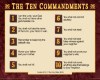
The Ten Commandments are often known as the Decalogue (“ten words”). They are revealed to Moses by God (the LORD) and are found in Exodus 20:1-17 and Deuteronomy 5-6:22. The Ten Commandments are given to the Israelites as part of the Mosaic Covenant (Ex. 19-24). When Jesus says he will fulfill the Law and Prophets and not abolish them, it’s these laws he speaks of in Matthew 5:17. Jesus speaks very highly in a variety of places in the Gospels on how important the Commandments remain. The Catholic Church has always viewed the Ten Commandments with high honor and respect. They are to be kept with diligence and are not options, advice, suggestions, or psychological babble. They are important – they are TEN COMMANDMENTS!

The Ten Commandments are printed on the very heart of man (natural law) and they display for us how to love God and our neighbor. They were written on stone to signify that they are as durable as stone. The Commandments were written for all of humanity for all time. The Natural Law remains constant and never changes to “fit” the culture. The Natural law is about preserving life, developing as individuals & communities, and sharing life with others.  If you read the Commandments, you will see these three themes rooted in the Law.  Although these laws are held with praise, the Old Law does not give us grace. The Ten Commandments find their fulfillment in the New Law of Love – Jesus Christ and the Beatitudes. It’s Christ himself that sheds grace upon us.

Responsorial Psalm: Psalm 19: 8, 9, 10, and 11

The Psalms are right in the center of the Bible and there are 150 psalms. There are different genres of psalms: Hymns of Praise, Lamentation and Deliverance, Thanksgiving, Royal Psalms, Wisdom Psalms, and other Liturgical, Prophetic, and Historical Psalms.

Psalm 19 is in Book 1. It’s an individual lament by David. He is giving praise for God’s creation and the Law. Part 1 of this psalm is praising God for the Sun (creation) and part 2 is praising God for the Law. The psalm is suggesting that the Law of God is like the sun. Just as the sun gives us illumination, so does the Law. The forms of the law that mentioned are law, precepts, and commandments. The qualities that are associated with the forms of the law are perfection, reliability and purity. Then we have the benefits that the law brings humanity and these are life, wisdom, joy, and light.

In verse 9, we read the “fear of the Lord.” The fear of the Lord is not being afraid of God (not fear as in I am afraid of what the NY Yankees will do the Boston Red Sox this season with Bobby Valentine as manager…Ha ha… you will see more Baseball references from me until October) but it means we should be in awe of God. God deserves our respect and honor for he is our creator and we adore him above all. The person who keeps the Law will honor God just as the earth benefits from the heat and light of the sun. In verse 11, there is a reward in keeping the Law, since it’s very easy to break the law without realizing it and nothing escapes the judgment of God. God always knows what we are doing.

Second Reading: 1 Corinthians 1:22-25

1 Corinthians was written by the St. Paul (Apostle to the Gentiles). He says it twice himself in 1:1 and 16:21. The Early Church Father, St. Clement of Rome (95 A.D.) supports the claim as well. It was written in 56 A.D. on his third missionary journey while in Ephesus. The Corinthian church was founded in 51 A.D by St. Paul. Ephesus is the city where the Apostle John and Mary go after Jesus’ Ascension into heaven. Ephesus is located in modern day Turkey.

Corinth was a large metropolitan. It was a cosmopolitan city that also was a seaport that attracted many entrepreneurs, tourists, sailors, and tradesmen. However, being that it was this type of city it was filled decadence and sin. Imagine Las Vegas on the water. 1 Corinthians speaks of many of the same issues that Church has faced throughout her generations and we still see today: internal divisions, sexual immorality, denials of the Resurrection, and carelessness in the liturgy. St. Paul calls them back to basic Christian doctrine (hmmm..sound familiar?). St. Paul is stern yet a loving father with these issues.

In Verse 22, it speaks of the Jews and the Greeks since Israel was always looking for great signs to authentic the Messiah’s mission (Mt 16:1, Jn 6:30) and Greeks as philosophers were always looking for the hot new thing to explain the universe (wisdom).  Verse 23 says, “we preach Christ crucified.” For some Jews, crucifixion was associated with the curse of God (Dt 21:22-23). Christ endured this curse of death so that both Israel and Gentiles could have a new life.

Gospel Reading: John 2:13-25

The Gospel was written by St. John the Apostle. Known in the Gospel as the “disciple whom Jesus loved” or the “beloved disciple.” The Gospel was more than likely written in 90 A.D. when John was an old man. It was written in Greek but with an Aramaic influence to both Jews and Jewish Christians. The theme of the Gospel is: Jesus of Nazareth is the Messiah who was promised by God to the Old Testament and he is the Son of God the Father. The Gospel of John compliments the synoptic gospels (Matthew, Mark, and Luke). In this Gospel, Jesus says, “I am” 54 times. It’s here where we hear the many great names for Jesus – I am Sheep Gate, I am Bread of Life, I am Vine, I am the Good Shepherd and many more. There is also a sacramental approach in John. He focuses heavily on the Eucharist, Baptism, and Reconciliation. The important Bread of Life Discourse (John 6) is read here as well. John 6 correlates perfectly when Jesus establishes for us the New Covenant in Luke 22.

In Verse 13, we read that it was the Passover. The Passover was celebrated every spring to commemorate Israel’s release from slavery in Egypt. We see in John the Passover celebrated 3 times. This is how we know Jesus ministry lasted three years. The Synoptic Gospels mention the Passover only once.  The Cleansing of the Temple is mentioned in all four Gospels, but John places it at the beginning while the synoptic Gospels place it at the end. It’s the same event in all four Gospels but John is trying to show the same thing with the Wedding Feast of Cana. The New Covenant is coming to fulfill the Old covenant. It’s a strong theological point!  There is also the chance that Jesus might have cleansed the temple twice (Read the Old Testament – The Israelites tend to disobey over and over again).

The Jerusalem Temple was divided into four sections (Gentile Court, Women’s Court, Men’s Court, and the Levitical Court). The Cleansing of the Temple is happening in the court where Gentiles were welcomed, since this was the only place in the Temple complex they could worship. Jesus is angry (verse 17 – righteous anger) because the merchants are cheating the people of the items they are selling. The city of Jerusalem had a large pilgrimage economy. Instead of bringing the animals for sacrifice from home, one could purchase the animals for sacrifice in Jerusalem. It’s similar to city of Rome today who has a pilgrimage economy. Jesus is also upset that the merchants are not allowing the Gentiles to pray and worship since they are in that part of the Temple.

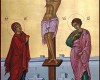
In verse 15, we read of the aggressive actions of Jesus. These actions show us that the sacrifices of the Old covenant would be destroyed and no longer occur in the Temple. Jesus Christ, on the cross, would destroy all of these old covenant sacrifices with the one perfect sacrifice.

In verse 19, it’s not the sacred building that would be destroyed in 3 days, but he was referring to his body. The Jews thought that this Temple (the Temple built after the return from exile and renovated by Herod the Great) was the fulfillment of the Solomonic Temple in 1 Kings 8.

To understand Jesus as the New Temple, I give you this explanation. In the Levitical Court of the Temple, the lambs were sacrificed. To clear out the blood, the priests would flush it out with water. On the side of the Temple, there was a drain that would pour into the Gihon River. The blood of the lambs and the water would pour out of this drain together. This points to our Lord on the Cross-when the blood and water would pour forth from the side of Him on the Cross. Jesus fulfills the prophecy of the Solomonic Temple. Jesus is the New Temple on the Cross!

I hope you enjoyed reading this as much as I enjoyed explaining it to you. Don’t forget to follow the blog to receive email notifications when I post.

Conscience Formation 102

I must first throw a shout-out to my favorite football team, The New York Football Giants (Big Blue, G-Men), who won Super Bowl XLVI last night. I sat home last night dressed in my Giants shirt and Giants hat and screamed and yelled at the television like a lunatic for 4 hours. In the end, the G-Men pulled out a victory and to say I am happy is an understatement. They beat the Patriots for the second time this year and the second time in a Super Bowl in the past five years. GO BIG BLUE!!

Now that I got that out of my system, let’s look at What Conscience IS.  According to the Catechism of the Catholic Church 1778, “Conscience is a judgment of reason whereby the human person recognizes the moral quality of a concrete act that he is going to perform, is in the process of performing, or has already completed. In all he says and does, man is obliged to follow faithfully what he knows to be just and right.”

According to the Vatican II document, Gaudium et Spes (16), the meaning of conscience – “Deep within his conscience man discovers a law which he has not laid upon himself but which be must obey. Its voice, ever calling him to love and to do what is good and to avoid evil, sounds in his heart at the right moment: do this, shun that. For man has in his heart a law inscribed by God. His dignity lies in observing this law, and by it he will be judged. His conscience is man’s most secret core and his sanctuary. There he is alone with God whose voice echoes, in his depths.”  This law that GS is speaking of is the Natural Law. It’s the law that is written on our hearts and directs us to good and avoid evil. The Natural law connects us with the Divine Law of God and it allows us to know human nature through human reason.  The Natural Law is unchanging in any time or place, which means it’s objective (compared to subjective…relativism). It helps us to preserve life, develop individuals and communities, and sharing life with others. Keeping these three points in mind, we see the Natural Law clearly displayed for us in the Ten Commandments.  The Ten Commandments preserve life, assist with individuals and communities, and shares in the life of others. Read the Ten Commandments and you will see these points.

The above definition from GS helps us to define three intertwining points of conscience that helps with the comprehension of moral truth. The three points are “Conscience is awareness of God’s call to be, Conscience is awareness of God call to know and do the good, that is, to love, and Conscience is a practical judgment of the intellect.”

First, “Conscience is awareness of God’s call to be” is rooted in the very core of the human person where we exist with the God as the Trinity. This call from God comes as an invitation for us to answer him, for we are created in his image and likeness; we are his children. The conscience is personal as is our relationship with God.   Second, “Conscience is awareness of God’s call to know and do the good, that is, to love” should be displayed by us who strive to mirror God in all that we do. When we love, we do the good and avoid evil. This happens when we follow the natural law that God has written on our hearts. As conscience is personal, it’s also to do the good and avoid evil. Lastly, “Conscience is a practical judgment of the intellect.” The practical judgment of the intellect helps in those situations that occur to us on a daily basis. Blessed John Paul II said that conscience is a judgment and NOT a decision. Assisted by God himself, this internal call helps with the good actions and evil actions we have committed, about to commit, or have committed in the past. There is great deal of practicality to the conscience. It helps us to do the good and avoid evil.  The three points together show us how to love God by doing the good and avoiding evil while still remaining practical. Through our conscience we must seek out moral truth.

However, our conscience is not merely an individual entity, but we must strive to unite our conscience with that of the human community. As the human community, we must seek out truth itself, especially the moral truth that allows us to know the objective norms of morality and in turn will allow us to seek the common good.  As part of the Christian community, the individual must learn to live among others seeking what is best for them as well. Christ established the Church as a community of believers here on Earth and from the beginning of the world, we were meant to live in a community.  We were not to live alone. Within in the community there are many issues that must be discussed, such as how a nation will deal with illegal immigration, or the economy, or religious freedom. An essential point of the Christian community is to be responsible to for one another and to aid in the moral procedures and laws that will affect the life we live together.

Conscience Formation 103 and 104 will come later this week.

I encourage you to leave comments and questions. I also encourage my colleagues and friends who are reading my blog to leave comments so we all have a deeper understanding of Conscience Formation.