“Mondays with Mary” – Mary: The Mother of Life

Over the weekend, the Pontifical Council for the New Evangelization called the Church together to celebrate Blessed John Paul II encyclical on the Gospel of Life as part of the Year of Faith festivities. The encyclical focuses on the importance of human dignity.

Two main events took place on Saturday. The first was an educational conference titled – The Gospel of Life and the New Evangelization. His Eminence Raymond Leo Cardinal Burke gave the Keynote Address. The second event was a Holy Hour for Life that consisted of Eucharistic Adoration and Benediction. It took place Santo Spirito in Sassia Church. The main celebrant was His Excellency Archbishop Joseph Augustine Di Noia, O.P., Vice-President of the Pontifical Commission Ecclesia Dei.

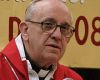
Pope FrancisThe weekend concluded with a Papal Mass celebrated by Pope Francis in St. Peter’s Square. In his homily, Pope Francis said,

 “On the basis of the word of God which we have heard, I would like to offer you three simple points of meditation for our faith: first, the Bible reveals to us the Living God, the God who is life and the source of life; second, Jesus Christ bestows life and the Holy Spirit maintains us in life; and third, following God’s way leads to life, whereas following idols leads to death…

…Dear brothers and sisters, let us look to God as the God of Life, let us look to his law, to the Gospel message, as the way to freedom and life. The Living God sets us free! Let us say “Yes” to love and not selfishness. Let us say “Yes” to life and not death. Let us say “Yes” to freedom and not enslavement to the many idols of our time. In a word, let us say “Yes” to the God who is love, life and freedom, and who never disappoints (cf. 1 Jn 4:8; Jn 11:2; Jn 8:32). Only faith in the Living God saves us: in the God who in Jesus Christ has given us his own life, and by the gift of the Holy Spirit has enabled us to live as true sons and daughters of God. This faith brings us freedom and happiness. Let us ask Mary, Mother of Life, to help us receive and bear constant witness to the “Gospel of Life”.”

mother of life

Picking up where Pope Francis left off asking for Mary, the Mother of Life to help us receive and bear witness to the “Gospel of Life”, I present to you some excerpts from Beatification Pic of JP IIBlessed John Paul II encyclical that focus on Mary and her role as the Mother of Life -

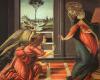
“The one who accepted “Life” in the name of all and for the sake of all was Mary, the Virgin Mother; she is thus most closely and personally associated with the Gospel of life. Mary’s consent at the Annunciation and her motherhood stand at the very beginning of the mystery of life which Christ came to bestow on humanity (cf. Jn 10:10). Through her acceptance and loving care for the life of the Incarnate Word, human life has been rescued from condemnation to final and eternal death…

…For this reason, Mary, “like the Church of which she is the type, is a mother of all who are reborn to life. She is in fact the mother of the Life by which everyone lives, and when she brought it forth from herself she in some way brought to rebirth all those who were to live by that Life”…

…As the Church contemplates Mary’s motherhood, she discovers the meaning of her own motherhood and the way in which she is called to express it. At the same time, the Church’s experience of motherhood leads to a most profound understanding of Mary’s experience as the incomparable model of how life should be welcomed and cared for

…But the Church cannot forget that her mission was made possible by the motherhood of Mary, who conceived and bore the One who is “God from God”, “true God from true God”. Mary is truly the Mother of God, the Theotokos, in whose motherhood the vocation to motherhood bestowed by God on every woman is raised to its highest level. Thus Mary becomes the model of the Church, called to be the “new Eve”, the mother of believers, the mother of the “living” (cf. Gen 3:20)…

…In the Book of Revelation, the “great portent” of the “woman” (12:1) is accompanied by “another portent which appeared in heaven”: “a great red dragon” (Rev 12:3), which represents Satan, the personal power of evil, as well as all the powers of evil at work in history and opposing the Church’s mission…

…Here too Mary sheds light on the Community of Believers. The hostility of the powers of evil is, in fact, an insidious opposition which, before affecting the disciples of Jesus, is directed against his mother. To save the life of her Son from those who fear him as a dangerous threat, Mary has to flee with Joseph and the Child into Egypt (cf. Mt 2:13-15)…

…Mary thus helps the Church to realize that life is always at the centre of a great struggle between good and evil, between light and darkness. The dragon wishes to devour “the child brought forth” (cf. Rev 12:4), a figure of Christ, whom Mary brought forth “in the fullness of time” (Gal 4:4) and whom the Church must unceasingly offer to people in every age. But in a way that child is also a figure of every person, every child, especially every helpless baby whose life is threatened, because-as the Council reminds us-”by his Incarnation the Son of God has united himself in some fashion with every person”

Mary is a living word of comfort for the Church in her struggle against death. Showing us the Son, the Church assures us that in him the forces of death have already been defeated: “Death with life contended: combat strangely ended! Life’s own Champion, slain, yet lives to reign.


“The Apostle of Common Sense”

G.K. Chesterton

Today we commemorate the 77th anniversary of the death of “the Apostle of Common Sense” – Gilbert Keith Chesterton.  In a time when the world needs more common sense than ever before, we should be reading this prolific and prophetic writer as one drink’s cold water during the summer months in the Arizona desert.

With the outbreak of political correctness, the redefining of marriage, and the “protection of individual rights”, Chesterton and his straightforward wit and intellect is greatly needed to remedy the disease of the Neo-pagan, individualistic, relativistic and secular post-Christian culture we now reside. Reading him will allow us to combat the idiotic tendencies of the Kool-Aid drinking sheep that now live next door to us.

I was first introduced to the man while studying as an undergrad in the Saint Ignatius Institute at the University of San Francisco. My first engagement with him was reading the book, The Everlasting Man, in the course, Revelation and Christology, which was taught by a theological giant – Reverend Joseph Fessio, S.J.

If you have never read Chesterton before, I suggest the title – G.K. Chesterton – The Apostle of Common Sense by Dale Ahlquist. The book provides an excellent overview of Chesterton’s writings. You can also head over (only after you have finished reading this post) to Brandon Vogt’s website. He is giving away some of Chesterton’s writings today to honor the inexhaustible writer. If those are not enough for your inquisitive minds, check out the American Chesterton Society.

So where does the understanding of common sense derive from in G.K. Chesterton’s writings? In one of his most important books and the most neglected (Heretics), he says, “We who are Christians never knew the great philosophic common sense which inheres in that mystery until the anti-Christian writers pointed it out to us.” According to Chesterton, the Christian faith (and in the end particularly Catholicism) is common sense.

The complete lack of common sense lies within a heresy. Heresies are half-truths that are exaggerated “at the expense of the rest of the truth.” Catholicism sees a heresy as not just a false doctrine, but also really an incomplete doctrine. Heretics reject part of the truth and then attack the greater segment of the truth. They are incomplete in their thought process. Dale Ahlquist says, “The reason why Chesterton is an apostle of common sense is that he is a complete thinker. The reason he could recognize heresy is because he could expose incomplete thinking.”

As we receive news at the rapid rate that we do today via technology, we come to know the lack of complete thinking that exists among many of our current media related people because they are driven by an agenda that seeks to destroy the common good and the beauty of the human person by a punch of their keyboard. However, its not just modern journalists that are inebriated in this thought process, but it’s also the modern man. In his book, Orthodoxy, Chesterton focuses at one point on the importance of faith and reason. He argues that the modern man has lost the capacity of intellectual thought and in turn as lost common sense. Sound familiar? It’s as if he is writing these words today.

As much as I would love to provide you with a complete overview of G.K. Chesterton, there is no way on God’s green earth that’s possible at this time. If I chose to take on such an endeavor, I would be sitting at my kitchen table “come Rapture” (Shawshank Redemption).

Chesterton smoking a cigar

If there was ever a quotable person in the history of the world, it’s G. K. Chesterton. It’s my hope that this post has inspired you to seek out the greatest Catholic writer of the 20th century (my informed opinion of course) and to read him in order to become a complete thinker in an age of incomplete minds. Chesterton says…

“Religious liberty might be supposed to mean that everybody is free to discuss religion. In practice it means that hardly everybody is allowed to mention it.” – The Collected Works of G.K. Chesterton 

“Poetry is sane because it floats easily in an infinite sea; reason seeks to cross the infinite sea, and so make it finite…The poet only asks to get his head into the heavens. It is the logician who seeks to get the heavens into his head. And it is his head that splits.” – Orthodoxy                                                                                    

“The Christian ideal has not been tried and found wanting. It has been found difficult; and left untried.” – What’s Wrong with the World                                                             

“The Catholic Church is the only thing which saves a man from the degrading slavery of being a child of his age.” – The Catholic Church and Conversion

“The modern world is not staring fresh things that it can really carry on far into the future. On the contrary, it is picking up old things that it cannot carry on at all.” – The Thing: Why I am a Catholic

The moderns have created a worship of sex “which exalts lust and forbids fertility.” – The Well and the Shallows                                                                                    

“The truth is that when critics have spoken of the local limitations of the Galilean, it has always been a case of the local limitations of the critics.” – The Everlasting Man                                                                                                                    

Speaking on Marriage (of course between a man and woman) and Catholicism – “The religion that holds it most strongly will hold it when nobody else holds it.” – The Superstition of Divorce                                                                      

Eugenicists and the wrong idea of medicine: “We call in the doctor to save us from death; and, death being admittedly an evil, he has the right to administer the…most recondite pill which he may think is a cure for all such menaces of death. He has not the right administer death as the cure for all human ills.” – Eugenics and Other Evils  

“There cannot be a stiffer piece of Christian divinity than the divinity of Christ.” – St. Thomas Aquinas 

Tony, Tony, Come Around…

Many people know of St. Anthony of Padua by the little “prayer” that is said for his intercession when they lose something and can’t find it –

Tony, Tony, Come Around, Something is Lost and Can’t Be Found.

Like St. Francis of Assisi, who was a contemporary of St. Anthony of Padua, non-Catholics seem to know of him because of the above prayer that their Catholic friends often recite when something is lost. However, St. Anthony of Padua is much more than just the “saint of lost things”, he was a major powerhouse of Catholic theology in his own time and is known as the Evangelical Doctor because of his great sermons he would preach.

Yes, St. Anthony of Padua is a Doctor of the Church. This means that his theology impacted the Church in such a way doctrinally that after his death he was elevated to not only Sainthood through Canonization, but the Church declared him a Doctor as well.

St Anthony of Padua detail

He was born in Lisbon, Portugal in 1195, however his name “of Padua” comes from the place where he last lived and where his relics are venerated still to this day. Most Catholics believe St. Anthony to be Italian, but in reality he is of Portuguese descent. At birth, his name was Ferdinand and only changed his name to Anthony when we entered the Order of Friars Minor (Franciscans). As a young child, he lived a pretty relaxed life growing up with two brothers and two sisters. His parents were of Portuguese nobility and were very faithful to the Catholic faith. His family life was happy and holy.

During his early adolescent years, he studied under the clergy of the Lisbon cathedral, but eventually joined the regular canons of St. Augustine that were near the city. Prayer and study became the life for young Ferdinand; however, family and friends often distracted him. He asked to be moved to the monastery in Coimbra, where he could confine himself to prayer and study without the distractions. He had a great love for study, a fantastic memory, and an extensive knowledge of the Holy Scriptures.

After seeing the relics of the Franciscan martyrs who were slain by Moors in the country of Morocco, Ferdinand was moved by their zeal to die for Christ and requested to join the Friars Minor. He was admitted to the order in 1221. In the fashion of the five martyrs, Anthony requested to be sent to Morocco, but a severe illness overcame him shortly after landing on African soil. He was ordered back to Europe. He would never die a martyr’s death.

On his way back, the boat he was sailing on went off course and landed in Messina on the northeastern tip of Sicily. There he found out that a general chapter – the great chapter of 1221 – a gathering of over 3,000 Franciscan brothers was to occur at St. Mary of the Angels Church in Assisi. After the gathering, Anthony was appointed the lonely hermitage of San Paolo near Forli since the Franciscans didn’t think to much of him. During his time there, an ordination took place of Dominicans and Franciscans, however, nobody prepared a homily. Anthony was told that he had to preach. Out of obedience he took his place at the lectern and preached what the Holy Spirit inspired him to say. All were amazed and struck with awe of the beautiful words Anthony spoke of God’s love. The Franciscans then realized the great pearl they had with Anthony and assigned him as a professor of theology in the cities of Bologna, Toulouse, Montpellier, and Padua.

St. Anthony of Padua

While a professor of theology, he was also commissioned as a preacher. Although he was an excellent teacher, his real gifts lied within the pulpit. His reverberating voice, which was both eloquent and persuasive, carried the Gospel message to all he preached. Like all great priests, he had a true zeal and love for souls. His personality dripped of holiness – so much that the mere sight of him would bring sinners to their knees. Many people flocked to hear him preach and many were often converted and received confession.

It is through this demeanor that he became known as the Hammer of the Heretics. He was often mocked and verbally abused by heretics who claimed that the Gospel was false. There are many miracles that are attributed to Anthony when speaking to heretics, such as his sermon to the fish at Rimini. Here he preached to the fish about their pure water, freedom, and many things to eat. The fish all bowed their heads together. Anthony said, “God be praised…for the fish of the water honor Him more than the heretics!” He never backed down, always spoke the Truth with love, and many came to believe in Jesus Christ through his life changing words. He is a true example for us in today’s Neo-Pagan culture. We must preach the Gospel message, even when we are mocked.

After working as an envoy for the general chapter of 1226 to Pope Gregory IX, he was released by the Holy Father and began his preaching again. From that point forward, Anthony returned and resided in Padua until his death. He loved Padua because of the great faith and fruit he found there among the faithful.

After preaching some sermons outside of Padua, Anthony came down with a sickness that made it clear his days this side of heaven were coming to an end. On June 13, 1231, he received his late rites, received Holy Viaticum, sang a hymn to Mary, and entered into his heavenly reward. As tears filled his eyes, he said, “I see my Lord!” He was only thirty-six years old.

Nearly one year after his death, Pope Gregory IX canonized him a Saint. He also honored with the anthem of “O doctor optime” which was a prophetic statement fulfilled by Pope Pius XII who declared him a Doctor of the Church in 1946. He is the youngest of the male doctors.


Real Life Radio Interview on the Mike Allen Show

It’s my hope that I will be able to download the two radio segments from my interview on the Blessed Mother and New Evangelization soon, but for now, you can check out the Mike Allen Show page on the Real Life Radio website to hear my interview from June 5, 2013. Once I have the segments on my blog under “Radio Interviews”, I will post again to let you all know. Just follow the link – Mike Allen Show to listen to the interview. My interview begins at 12:25 in segment 1 and goes till 11:05 in segment 2. Hope you can listen to them and share the link with others.

If you know of Catholic radio stations here in the United States or across the globe that would be interested in interviewing me, please have them contact me at catholictom at gmail dot com.

Teaching the Catholic faith on the radio is very exciting!

“Mondays with Mary” – The Immaculate Heart of Mary

This past Saturday was the feast of the Immaculate Heart of Mary. It’s a devotion similar to the Sacred Heart of Jesus but with less fervor. However, St. John Eudes, who is also a “Saint of the Sacred Heart”, helped popularize this devotion during his time.

Miraculous MedalIt became very popular after the apparitions at Rue du Bac where St. Catherine Labouré had visions of the Blessed Mother. The devotion to the “Miraculous Medal” developed from this same apparition. A society loyal to the Immaculate Heart of Mary began in Paris during the year of 1836 at the Church of Our Lady of Victories.

To learn more about the Immaculate Heart of Mary, please read from last year – “Mondays with Mary” – The Immaculate Mother and Pope Benedict XVI. To learn more about the “Miraculous Medal”, please read – “Mondays with Mary – The Miraculous Medal.”

As we saw with Pope Francis on Day 1 of his Papacy, he has a strong devotion just as his Pope Francis kneeling at St. Mary Majorpredecessors did to the Blessed Mother of God. On Saturday in Rome, Pope Francis said the following about Mary, pondering the Word of God, and using our memory to remember the Word of God:

“Keeping the Word of God: what does this mean? Do I receive the Word, and then take a bottle and put the word into the bottle and keep it there? No. Keeping the Word of God means that our heart opens, it is open to that Word just like the earth opens to receive the seed. The Word of God is a seed and is sown. And Jesus told us what happens with the seeds: some fall along the path, and the birds come and eat them; this Word is not kept, these hearts do not know how to receive it”.

“John Paul II said that, because of this work, Mary had a particular heaviness in her heart, she had a fatigued heart. But this is not the same as tired, it is fatigue, this comes from effort. This is the effort of keeping the Word of God: the work of trying to find out what this means at this moment, what the Lord wants to say to me at this time, this situation of questioning the [meaning of] the Word of God is how we understand. This is reading our life with the Word of God and this is what it means to keep it in our hearts”.

“We would do well to ask ourselves: ‘With the things that happen in life, I ask myself the question: what is the Lord saying to me with His Word, right now?’. This is called keeping the Word of God, because the Word of God is precisely the message that the Lord gives us in every moment. Let us safeguard it with this: safeguard it with our memory. And safeguard it with our hope. We ask the Lord for the grace to receive the Word of God and keep it, and also the grace to have a heart that is fatigued in this effort. So be it”.

Immaculate Heart of Mary

 Let us ask Mary to help us ponder the Word of God in our hearts as she kept all her experiences of the Word Made Flesh in her heart. For further prayer, please learn the Consecration to the Immaculate Heart of Mary.

The Sacred Heart of Jesus

The visions of Christ and the eventual devotion of the Sacred Heart of Jesus began with St. Margaret Mary Alacoque around the year 1671. During the visions, Our Lord asked that she would spread devotion to his Sacred Heart, the devotion of First Fridays, and the practice of making Holy Hours before the Blessed Sacrament.

Christ promised in his visions to her that those who consecrate themselves to his Sacred Heart would receive graces necessary in their state of life, a plethora of blessings and comfort, and peace in their homes. Those who receive Holy Communion for nine consecutive First Fridays will be given grace of final perseverance and will find refuge at the moment of death through the Sacred Heart.

St. Margaret Mary Alacoque entered Heavenly Glory on October 17, 1690 at Paray-le-Monial and was canonized a saint by Pope Benedict XV in 1920. Her feast day is celebrated on October 17. Along with her, St. John Eudes and Blessed Claude La Colombiere are known as the “Saints of the Sacred Heart.” Pope Clement XIII officially approved the devotion of the Sacred Heart in the year 1765.

This has been a blessed week in the life of the Church. On Sunday, we celebrated the great Solemnity of Corpus Christ and now at the end of the week we celebrate the Sacred Heart of Jesus. Both of these days focus on the Blessed Sacrament, Christ’s True Presence among us today.

sacred_heart_of_jesus

Act of Consecration to the Sacred Heart of Jesus

To the Sacred Heart of Our Lord, Jesus Christ, I give myself and I consecrate my person and my life, my actions, pains, and sufferings, so that I may be unwilling to make use of any part of my being other than to honor, love, and glorify the Sacred Heart.

This is my unchanging purpose, namely to be all his and to do all things for the love of him, at the same time renouncing with all my heart whatever is displeasing to him. I therefore take you, O Sacred Heart, to be the only object of my love, the guardian of my life, my assurance of salvation, the remedy of my weakness and inconstancy, the atonement for all the faults of my life, and my sure refuge at the hour of death.

Be then, O Heart of goodness, my justification before God the Father, and turn away from me the strokes of his righteous anger. O Heart of love, I put all my confidence in you, for I fear everything from my own weakness and frailty, but I hope for all things from your goodness and bounty.

Remove from me all that can displease you or resist your holy will; let your pure love imprint your image so deeply upon my heart that I shall never be able to forget you or to be separated from you. May I obtain from your loving kindness the grace of having my name written in your heart, for in you I desire to place all my happiness and glory, living and dying in bondage to you.  

Concluding Prayer

Father, we honor the heart of your Son, broken by our cruelty, yet symbol of love’s triumph, pledge of all that we are called to be. Teach us to see Christ in the lives we touch and to offer him living worship by love-filled service to our brothers and sisters. We ask this Christ Our Lord. 

June 6, 1944

On June 6, 1944, soldiers from the American, British and Canadian militaries stormed the beaches of Normandy, France and helped bring freedom back to Europe after years of tyranny and oppression under the Nazi Regime. We ask that God bless them all. We must never forget the men, their sacrifice, and their blood that drenched beaches that day.

We must always pray and give thanksgiving to all our military personnel who have served this country. Please keep in your prayers all those associated with the Archdiocese for the Military, USA.

“You are about to embark upon the greatest crusade toward which we have striven these many months. The eyes of the world are upon…Have full confidence in your courage, devotion to duty and skill in battle.” – General Dwight D. Eisenhower

“The ardour and spirit of the troops, as I saw myself, embarking in these last few days was splendid to witness. Nothing that equipment, science or forethought could do has been neglected, and the whole process of opening this great new front will be pursued with the utmost resolution both by the commanders and by the United States and British Governments whom they serve.” – Winston Churchill

Below is a video that commemorates the D-Day Invasion. Always remember the sacrifice these brave souls gave for our FREEDOM.